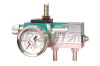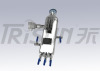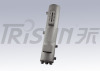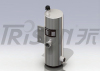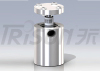
TS (THERMOSIPHON SYSTEM)
A thermosiphon is a passive cooling and circulation system used in mechanical seal support applications to prevent overheating, reduce seal failure, and improve equipment reliability. In demanding industrial environments, inefficient cooling can lead to fluid degradation, increased maintenance, and costly downtime.
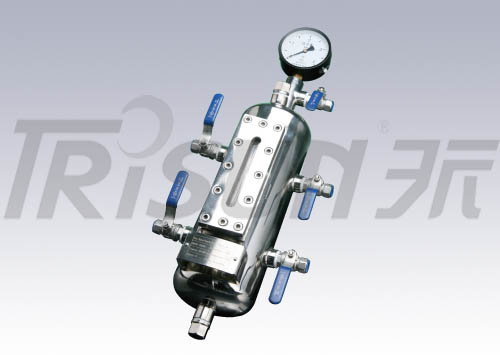
The TRISUN thermal circulation system is engineered for API Plan 52 and API Plan 53A applications, providing reliable barrier fluid circulation through natural convection—without the need for pumps or external power.
Technical specifications
This is a seal support system designed to cool and circulate barrier or buffer fluid for double mechanical seals using the natural heat transfer effect. By eliminating the need for an external circulation pump, it improves seal reliability, extends seal life, and reduces maintenance costs in demanding industrial applications.
| Specification | Details |
|---|---|
| Product Name | TS Thermosiphon System |
| Product Type | Seal Support System / Thermosiphon Vessel |
| Operating Principle | Natural Convection (Pump-Free Circulation) |
| API Piping Plans | API Plan 52, API Plan 53A |
| Vessel Capacity | 4L, 6L, 10L, 12L, 20L |
| Maximum Operating Pressure | Up to 2.5 MPa (25 bar) |
| Operating Temperature | -60°C to +200°C |
| Vessel Material | SS304 or SS316 Stainless Steel |
| Cooling Option | With or Without Cooling Coil |
| Nozzle Connections | G3/8 or G1/2 (Model Dependent) |
| Monitoring Components | Sight Glass, Pressure Gauge, Fill Port |
| Optional Accessories | Relief Valve, Level Switch, Thermometer, Refill Pump |
| Installation Position | Mounted Above Seal Chamber |
| Applications | Double Mechanical Seal Cooling & Barrier Fluid Systems |
Note: Operating limits and instrumentation configurations can be customised based on process requirements.
Compatible pump applications
Unlike standard mechanical seals, the TS System is not specific to one pump brand. It is compatible with any pump using double mechanical seals requiring API Plan 52 or Plan 53A support systems.
Typical compatible pump types
| Pump Type | Compatibility | Typical Industries |
|---|---|---|
| API Process Pumps | ✓ Compatible | Oil & Gas |
| Chemical Process Pumps | ✓ Compatible | Chemical Processing |
| Centrifugal Pumps with Double Seals | ✓ Compatible | General Industry |
| Refinery Pumps | ✓ Compatible | Petrochemical |
| Boiler Feed Pumps | ✓ Compatible | Power Generation |
| Slurry Pumps | ✓ Compatible | Mining |
| Pulp & Paper Pumps | ✓ Compatible | Pulp & Paper |
| Wastewater Pumps | ✓ Compatible | Municipal Applications |
Compatible mechanical seal arrangements
- Double Cartridge Mechanical Seals
- Tandem Mechanical Seals
- Back-to-Back Mechanical Seals
- Pressurised Dual Seals
- Unpressurised Buffer Fluid Systems
Material options
Since the TS thermal circulation system is a seal support vessel rather than a mechanical seal, traditional seal face materials such as SiC, TC, and Carbon are not directly applicable to the vessel itself. However, the system is designed to support double mechanical seals configured with these material combinations.
Supported mechanical seal face materials
| Rotary Face | Stationary Face | Recommended Applications |
|---|---|---|
| Silicon Carbide (SiC) | Silicon Carbide (SiC) | Abrasive and high-temperature services |
| Silicon Carbide (SiC) | Carbon | General chemical and process applications |
| Tungsten Carbide (TC) | Tungsten Carbide (TC) | Heavy-duty industrial applications |
| Tungsten Carbide (TC) | Carbon | Moderate abrasive duties |
| Carbon | Silicon Carbide (SiC) | Water and general process services |
Vessel material options
| Component | Material Options |
|---|---|
| Vessel Body | SS304 Stainless Steel |
| Vessel Body | SS316 Stainless Steel |
| Cooling Coil | SS304 |
| Cooling Coil | SS316 |
| Sight Glass | Borosilicate Glass |
| Gaskets | Viton, EPDM, PTFE |
| Mounting Brackets | Stainless Steel |
Instrumentation options
| Component | Availability |
|---|---|
| Pressure Gauge | Optional |
| Level Indicator | Standard |
| Thermometer | Optional |
| Pressure Switch | Optional |
| Relief Valve | Optional |
| Manual Refill Pump | Optional |
| Cooling Coil | Optional |
| Level Transmitter | Optional |
Dimensions table
The TS system is available in multiple vessel capacities to suit different seal cooling requirements.
| Model | Capacity (L) | Vessel Diameter (mm) | Body Length (mm) | Overall Height (mm) | Nozzle Size |
|---|---|---|---|---|---|
| TSL1.4 | 4 | 133 | 175 | 470 | G3/8 |
| TSL1.6 | 6 | 159 | 260 | 690 | G1/2 |
| TSL1.10 | 10 | 219 | 260 | 560 | G1/2 |
| TSL1.12 | 12 | 219 | 260 | 600 | G1/2 |
| TSL1.20 | 20 | 219 | 344 | 1400 | G1/2 |
Important: Vessel capacity should be selected based on the heat load, seal arrangement, process temperature, and available installation space.
Key applications
The TRISUN Seal Cooling System is designed to support reliable mechanical seal performance by controlling seal temperature and reducing heat-related wear. Key applications include:
Solar thermal and solar water heating systems
TRISUN’s Seal Cooling system is ideal for solar thermal systems and solar water heating applications. Using natural convection, it provides pump-free hot water circulation and improves energy efficiency.
Sustainable hot water supply
This system helps deliver consistent hot water using renewable solar energy, even in off-grid locations or during power outages.
Low-maintenance and energy-efficient operation
Because no electric pump is required, the system offers low maintenance, lower operating costs, and reliable long-term performance.
Wood fire water heater applications
The TRISUN pump-free heat transfer system is also suitable for wood fire water heaters and biomass heating systems, providing natural heat transfer to water tanks.
Natural circulation heating
It uses the seal support cooling system effect to move heated water without electricity, ensuring a steady supply of hot water.
Eco-friendly heating solution
By reducing electricity use and relying on renewable heat sources, the system helps lower energy costs and carbon emissions.
Advantages of TRISUN thermosiphon systems for residential and industrial use
| Feature | Description |
|---|---|
| Energy-Efficient | Operates without electricity or external energy sources, relying on natural fluid flow—significantly reduces energy costs. |
| Low-Cost Operation & Maintenance | Minimal wear and tear due to no moving parts like pumps—leads to lower maintenance costs, less downtime, and higher operational efficiency. |
| Reliability & Durability | Passive, self-regulating design ensures silent operation and minimal failure points—greatly enhances long-term reliability and system performance. |
Comparison: Passive heat transfer system vs pump-driven cooling systems
The passive cooling loop offers significant advantages over traditional pump-driven cooling setups. The comparison below highlights key differences to help you understand which solution is best for your application.
Seal cooling system with natural convection
No electricity or pump required
A seal support cooling system uses natural convection for passive cooling, eliminating the need for electrical power or circulation pumps.
Simple, reliable, and low maintenance
With fewer moving parts, seal cooling systems offer greater reliability, lower maintenance, and reduced risk of failure.
Energy-efficient and Cost-effective
These systems reduce electricity use and operating costs, making them ideal for API Plan 52 and 53A seal support systems, solar heating, and off-grid applications.
Pump-Driven cooling system
Requires power and more components
Pump-driven cooling systems rely on electricity, pumps, and additional mechanical components for forced circulation.
Higher maintenance and operating costs
Because they include pumps, seals, and motors, these systems require more maintenance and have higher long-term energy costs.
Best for large installations
Pump-driven systems are better suited for large-scale applications that require high coolant flow and forced circulation.
Installation requirements & operating conditions
To ensure optimal performance and safety, these system must be installed according to the following guidelines:
Mounting position for proper natural convection circulation
- Install the seal cooling system reservoir or seal support tank above the mechanical seal chamber to enable natural convection cooling.
- Maintain a vertical height difference of at least 300–800 mm between the seal chamber and heat transfer circulation tank for efficient barrier fluid circulation and heat transfer.
Piping layout for efficient seal support cooling system flow
- Use short, vertical piping runs wherever possible to improve natural circulation and reduce flow resistance.
- Avoid excessive pipe bends, long horizontal piping sections, or restrictions that can limit colling syatem performance.
- Select piping materials that are compatible with high-temperature fluids, abrasive liquids, and chemically aggressive process media.
Operating temperature and pressure limits
- Verify that the seal support cooling system matches the required operating conditions for your mechanical seal support system or cooling application.
- Typical seal cooling system operating temperature range: 0–200°C, depending on the model and barrier fluid.
- Typical seal support cooling system operating pressure range: up to 20–40 bar, depending on the reservoir design and vessel specification.
- Ensure the selected barrier fluid, heat transfer fluid, or glycol mixture is compatible with the required temperature and pressure range.
Cooling and ventilation around the seal support cooling system tank
- Provide adequate airflow around the passive heat transfer system tank, cooling coil, or heat exchanger to improve passive cooling efficiency.
- Keep the installation area free from dust, debris, and excessive ambient heat that could reduce heat transfer circulation system performance.
Barrier fluid and heat transfer fluid selection
- Use recommended barrier fluids for API Plan 52, API Plan 53A, and other mechanical seal support systems.
- For solar water heating systems, wood fire heaters, and industrial heat transfer applications, use water or glycol mixtures designed for high-temperature operation and freeze protection.
Maintenance guide
Passive heat transfer systems require minimal maintenance due to their passive, pump-free design. Regular inspection and fluid management ensure long-term reliability.
Routine checks
- Inspect fluid levels through the sight glass periodically.
- Ensure there are no leaks from fittings, piping, or the reservoir.
Barrier fluid condition
- Check barrier fluid for contamination, discoloration, or particles.
- Refill or replace fluid as needed based on operating hours and system load.
Pressure and temperature monitoring
- Confirm the system remains within safe pressure and temperature limits.
- Ensure cooling coils and external surfaces are clean and exposed to adequate airflow.
Cooling coil and external surface cleaning
- Clean dust, dirt, and debris from cooling fins or coils to maintain heat dissipation efficiency.
Safety component inspection
- Inspect relief compressor control valves, if installed, annually.
- Check mounting brackets, gaskets, and fittings for wear.
Annual seal cooling system maintenance
- Verify piping insulation integrity.
- Conduct a pressure test if required by site standards.
- Replace sealing components if signs of wear or degradation are present.
Common seal cooling system troubleshooting
- Poor Circulation: Check height positioning and piping restrictions.
- Overheating: Improve cooling airflow or clean the cooling coil.
- Low Fluid Level: Inspect for leaks and refill the barrier fluid.
- Foaming or Bubbles: Replace contaminated heat transfer fluid.
With proper installation and periodic maintenance, the cooling system delivers reliable, energy-efficient performance for many years.
How to select the right thermal circulation system reservoir size
The right thermal circulation system reservoir size depends on the seal type, operating temperature, process pressure, and pump heat generation. Proper sizing ensures adequate cooling, prevents overheating, and supports reliable seal performance.
Typical reservoir sizes
| Application | Recommended Size |
|---|---|
| Small pumps | 2–5 liters |
| Medium pumps | 5–12 liters |
| Large or high-heat pumps | 12–20+ liters |
A common guideline is to choose a reservoir that holds 10–20 times the fluid volume in the seal chamber and piping.
Example:
Seal chamber + piping volume = 0.5 liters
Recommended reservoir size = 5–10 liters
Use a larger reservoir when the system has:
- High temperatures
- Long piping runs
- Continuous-duty operation
- API Plan 53A service
- Hazardous or high-pressure fluids
For best performance:
- Install the reservoir 300–800 mm above the seal chamber
- Use short, vertical piping
- Add a cooling coil for temperatures above 80–100°C
- Use stainless steel reservoirs for corrosive or high-temperature applications
Why choose the TRISUN Thermosiphon system?
If you are considering enhancing your heating or cooling setup with a more sustainable solution, the TRISUN Passive Heat Transfer System offers numerous advantages. From its energy-efficient design to its low-maintenance operation, this solution can be a game-changer for both residential and industrial applications. Whether you're looking to optimize solar thermal systems, improve heat pipes performance, or need an effective way to transfer heat in wood-fired water heaters and industrial mechanical seal systems, TRISUN provides a reliable and cost-effective solution.
A passive heat transfer system operates using a sealed working fluid that absorbs thermal energy and circulates a fluid through natural evaporation and condensation without the need for external pumps. As heat is transferred, the vapor condenses in the cooler section, with the liquid returning to the evaporator by gravity or capillary action. This continuous cycle delivers efficient heat exchange, making the technology ideal for heat pipes, mechanical seal cooling, and barrier fluid circulation.
Designed for demanding industrial environments, the TRISUN Passive Heat Transfer System provides a reliable, energy-efficient solution for mechanical seal cooling and barrier fluid circulation. By eliminating mechanical pumps and utilizing natural convection, it reduces maintenance requirements, lowers operating costs, improves equipment reliability, and extends seal service life while delivering consistent thermal performance across a wide range of industrial applications.
Looking for a high-performance thermosiphon system for your application?
Contact TRISUN today for expert guidance, customized solutions, and fast global delivery.
Frequently asked questions
Q1: What is the purpose of a thermosiphon system in mechanical seals?
This thermosiphon system is used to cool and lubricate double mechanical seals, typically in tandem or back-to-back configurations. It circulates barrier fluid between the seal chamber and an external reservoir, helping to dissipate heat, reduce friction, and prolong seal life in high-pressure or high-temperature applications.
Q2: Where is the TS-Seal Cooling System commonly used?
The TS Seal Cooling System is ideal for use in pumps handling aggressive, hot, or abrasive media, especially in industries like:
Chemical processing
Oil and gas
Power generation
Pharmaceuticals
Wastewater treatment
It supports API Plan 52, 53A, and 54 seal piping arrangements.
Q3: Does the TS-Thermal Circulation System require an external power source?
No, this passive heat transfer System operates on the natural convection principle requiring no external pump or power source for circulation. This makes it energy-efficient, low-maintenance, and reliable even in remote or unmanned installations.
Q4: What are the key components included in the TS-Thermal Circulation system?
The natural convection cooling system typically includes:
Stainless steel pressure vessel with sight glass
Cooling coil or fins (optional)
Pressure gauge and filling port
Safety relief valve (optional)
Level indicators and mounting brackets
All components are built to handle demanding industrial sealing environments and ensure safe operation.
Q5: How do I ensure compatibility between the TS-thermal circulation System and my mechanical seal?
To ensure compatibility, consider the type of mechanical seal, piping plan, and operating conditions such as pressure, temperature, and fluid type. TRISUN's experts can help you select or customize the TS System based on your specific sealing requirements, ensuring optimal performance and extended seal life.
Q6. What is the difference between API Plan 52 and API Plan 53A Thermal circulation systems?
Both API Plan 52 and API Plan 53A can use a thermal circulation system to support double mechanical seals, but the appropriate configuration depends on the seal arrangement, barrier or buffer fluid requirements, operating pressure, temperature, and process conditions. The TRISUN TS Cooling System is designed for both API Plan 52 and API Plan 53A applications and can be configured with different vessel capacities, cooling options, and instrumentation.
Related Products