Common Dry Gas Seal Failures, Causes, and Prevention Best Practice
Jan 30, 2026
Dry gas seals are precision-engineered components widely used in compressors and turbomachinery to prevent gas leakage while enabling high-speed, high-pressure operation. Despite their reliability, dry gas seals can experience failures that lead to unplanned downtime, safety risks, and costly repairs. Understanding common failure modes, their causes, and preventive measures is essential for maintaining ANSI pump parts and ANSI pump components in associated systems.
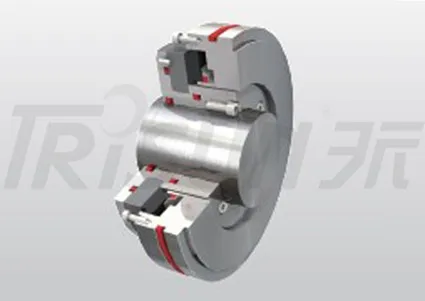
1. Face Wear and Scoring
Excessive friction or contamination on the seal faces can lead to scoring or uneven wear. For example, in natural gas compressors, solid particles or condensables in the gas stream have caused premature face wear. Prevention includes proper gas filtration, using compatible face materials like silicon carbide, and monitoring differential pressure across the seal.
2. Thermal Overload
High-speed operation and insufficient cooling can result in thermal distortion of seal faces. In a refinery centrifugal compressor, inadequate buffer gas flow caused rapid temperature rise, warping the seal and leading to leakage. Best practice is to ensure correct buffer gas supply, cooling arrangements, and operating within design limits.
3. Seal Face Misalignment
Misalignment of the shaft or housing creates uneven contact, accelerating wear and potentially causing catastrophic seal failure. Regular shaft alignment checks and precision installation, as practiced in petrochemical turbomachinery, prevent such issues.
4. Inadequate Lubrication or Buffer Gas Supply
Dry gas seals rely on a thin gas film for lubrication. Any interruption in buffer or barrier gas can result in metal-to-metal contact and rapid wear. Continuous monitoring of pressure and flow is a critical preventive measure.
5. Contamination and Particulates
Dust, dirt, or process debris entering the seal can damage faces and elastomers. Installing filters and ensuring clean installation environments are essential preventive steps.
6. Improper Installation or Handling
Dry gas seals are highly sensitive precision components. Mishandling, contamination during assembly, or incorrect torque application can lead to early failure. Following OEM installation instructions and using trained technicians is mandatory.
7. Vibration and Shaft Runout
Excessive vibration or unbalanced shafts can reduce seal life. Real-world experience in power generation turbines shows that correcting shaft balance and improving bearing support can extend seal service life by over 40%.
Conclusion
Preventing dry gas seal failures requires attention to face materials, alignment, lubrication, contamination control, and careful installation. Implementing these best practices enhances compressor reliability, reduces downtime, and protects associated ANSI pump components.
In addition, facilities that use multiple sealing technologies can benefit from applying the same maintenance strategy across all equipment. Regular inspection of component seals and Flygt pump seals for wear, leakage, and shaft condition helps prevent unexpected failures and supports the long-term performance of related dry gas seal systems. Choosing the correct seal type for each application—whether a dry gas seal for compressors, a component seal for standard pumps, or a Flygt pump seal for submersible wastewater pumps—improves reliability, lowers maintenance costs, and extends equipment life.
FAQs
1. What is the most common dry gas seal failure?
Face wear and thermal distortion are the most frequent causes.
2. Can contamination cause seal failure?
Yes, particulates or debris in the gas stream can damage seal faces and elastomers.
3. How can thermal overload be prevented?
Maintain proper buffer gas flow, monitor temperatures, and operate within design limits.
4. Are dry gas seal failures preventable?
Most failures are preventable with proper installation, monitoring, and maintenance practices.
.webp?x-oss-process=image/resize,w_100/quality,q_100)

Recent Posts

October 26, 2016
The Most Successful Engineering ContractorContact US
Product Information
Quantity
Unit
Piece
Support order samples, customization, wholesale direct, and complete payment. If the product you look for does not have corresponding customized content, pls fill out the form below to contact us, and we will reply ASAP.