Why effective shaft sealing is critical in fluid handling systems
Jan 28, 2026
Shafts play a crucial role in fluid handling systems. All important components, such as pumps, compressors, mixers, and agitators, rely on a rotating shaft to move fluids. For successful operations, proper sealing is essential to prevent leakage, energy loss, and equipment failure.
This makes effective shaft sealing a safety, performance, and cost issue. If you are working with a mechanical seal, a pump seal, a Grundfos seal, or a dry gas seal, the quality of shaft sealing directly impacts how well your entire system performs.
In this blog, we will discuss why shaft sealing is critical in modern fluid-handling systems.
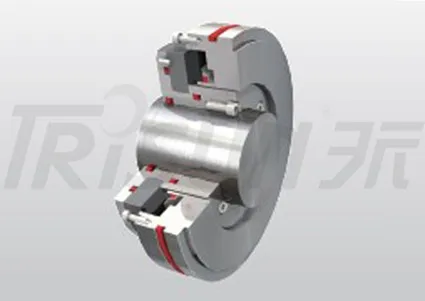
1. Shaft sealing prevents leakage and product loss
Shaft sealings act as a wall that stops fluid from escaping along the rotating shaft. Even minor leakage can cause serious problems and affect the entire system. Worn seals can cause loss of valuable fluids, reduce efficiency, create unsafe working conditions, and compliance issues.
A well-crafted pump seal or mechanical seal offers tight face contact and smooth shaft rotation. This helps prevent lag without excessive friction or heat. This makes real sealing absolutely essential for industries handling chemicals, fuels, or gases.
2. Effective sealing protects the shaft and internal pump components
When sealing fails, leakage doesn’t just escape outward; it often damages the shaft itself. Over time, this can lead to:
- Shaft scoring
- Corrosion
- Increased vibration
- Bearing damage
- Premature pump failure
Modern sealing designs, such as high-quality mechanical seals, protect the shaft surface, ensuring longer equipment life. The seal acts as the first layer of defense for internal components in many systems. Shaft sealing plays a vital role in applications where the system runs under high pressure and temperature.
3. Advanced seals improve performance in high-pressure applications
Traditional sealing methods struggle to maintain stability under high pressures. That is where advanced technologies, such as the dry gas seal, become critical.
Dry gas seals are designed to:
- Operate with minimal friction.
- Handle extreme pressures
- Maintain near-zero leakage
- Reduce heat generation
They are used in high-pressure systems where liquid lubrication is inefficient. If you are aiming to improve efficiency and reliability, dry gas seals represent a major advancement in shaft sealing technology.
4. Proper sealing enhances energy efficiency and reduces operating costs
Many operators underestimate the energy loss from poor sealing. Excess friction, heat generation, and vibration caused by ineffective shaft seals increase power consumption and reduce pump efficiency.
Modern pump seal and mechanical seal designs focus on:
- Lower friction seal faces
- Improved balance under pressure
- Better heat dissipation
- Stable operation during load changes
By reducing energy losses, effective sealing lowers electricity costs and improves overall system efficiency, benefits that add up significantly over time.
5. Application-specific seals improve reliability and reduce downtime
Every pump is different and is designed to perform under different conditions. This is why application-specific sealing solutions are becoming the norm.
For example:
- Grundfos seals are engineered to match the precise design and operating conditions of Grundfos pumps, improving compatibility and lifespan.
- Mechanical seals are preferred for high-temperature or chemically aggressive processes.
- Dry gas seals are good for high-speed compressors.
This is why choosing the right seal is essential. Smart operators choose sealing solutions that dramatically reduce unexpected failures, maintenance frequency, and unplanned downtime.
Final thoughts
Effective shaft sealing is critical to the reliability and performance of fluid-handling systems. Choosing the right sealing plays a central role in system success. This makes it essential to invest in the right shaft-selling solution that delivers uptime, safety, and long-term cost savings.
If your fluid-handling systems are experiencing leakage, frequent seal failures, or rising maintenance costs, it may be time to upgrade to a Trisun shaft sealing solution.
We offer advanced mechanical seals, pump seals, Grundfos seal solutions, and dry-gas seal technologies designed for modern industrial applications.
Contact us to know more.
Recent Posts

October 26, 2016
The Most Successful Engineering ContractorContact US
Product Information
Quantity
Unit
Piece
Support order samples, customization, wholesale direct, and complete payment. If the product you look for does not have corresponding customized content, pls fill out the form below to contact us, and we will reply ASAP.