Common causes of pressure instability in rotating machinery and how to prevent them
Jan 28, 2026
Do you know the most common issue in rotating machinery? It’s pressure instability. It starts with vibration, noise, and seal failures, and may look controllable. But pressure instability is often the result of mechanical component problems hidden inside the system.
Whether it's an Ebara pump, HVAC systems with an Armstrong pump seal, or a compressor control valve, it is essential to understand the root causes of pressure instability. This helps to save time, money, and equipment life.
In this guide, we will explore the most common causes of pressure instability and how to prevent them. Let’s begin.
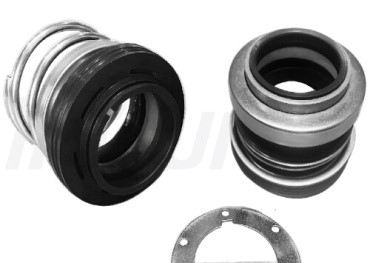
1. Worn or Damaged Pump Sleeves
A pump sleeve protects the pump shaft from wear caused by seals, corrosion, and abrasive fluids. When the sleeve becomes worn or scored, the shaft no longer runs true.
How this causes pressure instability:
- Shaft eccentricity causes uneven seal-face loading.
- Seal leakage increases under fluctuating pressure.
- Internal clearances change, affecting flow consistency
- Vibration increases, disrupting hydraulic balance.
How to prevent it:
- Inspect pump sleeves regularly during maintenance cycles.
- Replace worn sleeves before they damage the shaft.
- Use hardened or coated sleeves in abrasive applications.
- Ensure proper alignment during installation.
A healthy pump sleeve stabilizes shaft movement, thereby improving pressure consistency.
2. Seal Failure or Incorrect Seal Selection
Seals play a critical role in maintaining internal pressure. A failing or mismatched seal, such as an incorrect Armstrong pump seal, can quickly destabilize the entire system.
Common seal-related issues:
- Seal faces opening under pressure spikes.
- Elastomer degradation due to temperature or chemicals
- Incorrect balance ratio for operating pressure
- Poor installation leading to misalignment
Prevention strategy:
- Select seals based on actual pressure, temperature, and fluid data.
- Upgrade to modern mechanical seal designs where required.
- Replace seals proactively instead of waiting for leakage.
- Follow the correct installation procedures and torque values.
Stable sealing equals stable pressure.
3. Worn or Mismatched Pump Parts
Pressure instability is often a symptom of internal wear. Over time, critical pump parts such as impellers, wear rings, bearings, and shafts lose their original tolerances.
What happens when parts wear:
- Internal recirculation increases
- Flow becomes uneven
- Hydraulic efficiency drops
- Pressure fluctuates under load changes.
This is especially noticeable in older systems or heavily used pumps.
How to prevent it:
- Monitor performance trends (flow vs. pressure)
- Replace worn pump parts during planned shutdowns.
- Use OEM-equivalent or engineered replacement components.
- Avoid mixing incompatible materials or designs.
Restoring internal geometry restores pressure stability.
4. Compressor Control Valve Malfunction
In compressor-driven systems, pressure stability depends heavily on the compressor control valve. If the valve is slow, inaccurate, or improperly tuned, pressure fluctuations become unavoidable.
Common valve-related problems:
- Delayed response to pressure changes
- Sticking or hunting behavior
- Incorrect setpoints
- Wear due to contamination.
Prevention tips:
- Regularly inspect and calibrate control valves.
- Upgrade to faster-response or digitally controlled valves.
- Ensure clean process media to avoid valve fouling.
- Integrate valve diagnostics into maintenance plans.
A properly functioning compressor control valve smooths pressure variations across the entire system.
5. System Mismatch or Operating Outside Design Condition
Even well-built pumps, such as Ebara pumps, can experience pressure instability when operated outside their design range.
Common system-level causes:
- Operating too far from the best efficiency point (BEP)
- Frequent start-stop cycles
- Sudden load changes
- Improper piping design or restrictions
How to prevent this:
- Review pump curves and operating conditions
- Avoid throttling that forces unstable operation.
- Use variable speed drives where applicable.
- Ensure suction conditions meet design requirements.
Stable operation starts with operating the equipment as it was designed to run.
In essence
Pressure instability in rotating machinery can have multiple causes. It’s usually down to worn pump sleeves, failing pump seals, deteriorated pump parts that need replacing, control issues arising from a dodgy compressor control valve, or you have just been running the equipment way outside its optimal range.
The good news is, most of these problems are preventable if you do the basics right, choose high-quality components, swap the old out for new when you should, and actually bother to do regular maintenance.
Getting to the root of the problem does more than just resolve the pressure issue; it also saves you time and money and gives the equipment a chance to last a bit longer.
If your pumps or compressors are getting a bit temperamental, and that could be pressure fluctuations, lots of vibration, or those annoying seal failures, then maybe it's high time to upgrade those bits that are letting you down.
Trisun has got you covered with high-quality pump sleeves that have a bit more life, some pretty advanced sealing solutions that deliver the best in Armstrong pump seal style quality, stronger pump parts, and all sorts of engineered components designed to restore stability and reliability to your rotating machinery.
.webp?x-oss-process=image/resize,w_100/quality,q_100)
Recent Posts

October 26, 2016
The Most Successful Engineering ContractorContact US
Product Information
Quantity
Unit
Piece
Support order samples, customization, wholesale direct, and complete payment. If the product you look for does not have corresponding customized content, pls fill out the form below to contact us, and we will reply ASAP.