What Is a Sealing Pump and Why Is It Important in Industrial Systems?
Apr 02, 2026
In industrial systems, pumps are used to move liquids, chemicals, slurries, oils, and gases through pipelines and process equipment. However, without an effective sealing system, these pumps can leak, lose pressure, contaminate products, and fail prematurely.
A sealing pump refers to a pump equipped with a sealing mechanism that prevents fluid or gas from escaping around the rotating shaft, casing, or connection points. Pump sealing systems are essential for maintaining safety, reducing downtime, improving efficiency, and protecting the environment.
From centrifugal pumps and positive displacement pumps to compressors and mixers, nearly every industrial machine relies on some form of sealing technology. Common sealing methods include mechanical seals, gland packing, O-rings, cartridge seals, lip seals, and bearing isolators.
This guide explains what a sealing pump is, how pump seals work, the main types of sealing systems, and why they are so important in industrial operations.
Quick Answer: What Is a Sealing Pump?
A sealing pump is a pump that uses a sealing device to prevent the leakage of fluid, gas, or contaminants around the shaft or pump housing.
The sealing system ensures that:
- The pumped media stays inside the pump
- Air and contaminants stay out
- Pressure remains stable
- The pump operates safely and efficiently
Without proper sealing, industrial pumps can experience:
- Fluid leakage
- Pressure loss
- Bearing damage
- Equipment failure
- Increased maintenance costs
Key Takeaways
- A sealing pump uses a seal to stop fluid or gas leakage.
- Mechanical seals are the most common sealing method in modern pumps.
- Pump seals protect shafts, bearings, and internal components.
- Proper sealing improves pump reliability, efficiency, and safety.
- Different applications require different seal types, materials, and designs.
- Common pump sealing technologies include mechanical seals, gland packing, O-rings, lip seals, and cartridge seals.
- Seal failure is one of the most common causes of pump downtime.
Why Pump Sealing Is Important in Industrial Systems
Pump sealing is critical because industrial equipment often operates under:
- High pressure
- Extreme temperatures
- Hazardous chemicals
- Abrasive fluids
- Continuous operation
If a pump leaks, the consequences can include:
- Product contamination
- Environmental violations
- Safety hazards
- Energy loss
- Equipment shutdown
For example, a leaking chemical pump in a manufacturing facility can expose workers to dangerous substances and cause costly downtime.
In industries such as oil and gas, water treatment, food processing, pharmaceuticals, chemical manufacturing, and mining, proper pump sealing is essential for both performance and compliance.
How Does a Pump Seal Work?
As the shaft rotates, the seal prevents liquid or gas from escaping through the small gap around the shaft.
Step-by-Step Explanation
- The pump shaft rotates to move fluid.
- The sealing element stays in contact with the shaft or housing.
- A sealing barrier is formed.
- Leakage is minimized or completely stopped.
- The pump continues operating safely.
Different sealing systems achieve this in different ways. Some use friction contact, while others use non-contact or magnetic sealing methods.
Main Types of Pump Sealing Systems
Several types of pump sealing solutions are used depending on the fluid, pressure, temperature, and application.
1. Mechanical Seals
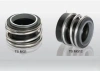
Mechanical seals are the most widely used sealing solution in industrial pumps.
They use two flat seal faces—one rotating and one stationary—to prevent leakage.
Advantages of Mechanical Seals
- Very low leakage
- Long service life
- Suitable for high pressure and temperature
- Better efficiency than gland packing
Common Applications
- Centrifugal pumps
- Chemical process pumps
- Boiler feed pumps
- Water treatment systems
2. Gland Packing
Gland packing is an older sealing method that uses braided packing material compressed around the shaft.
Advantages
- Lower cost
- Easy to replace
- Works well in abrasive applications
Disadvantages
- Requires regular adjustment
- Higher leakage than mechanical seals
- Can cause shaft wear
Common Applications
- Slurry pumps
- Mining pumps
- Industrial valves
3. Cartridge Seals
Why Cartridge Seals Matter
Because they come pre-set from the factory, cartridge seals reduce installation errors and improve reliability.
Benefits
- Faster installation
- Reduced downtime
- Longer seal life
4. O-Rings and Gaskets
O-rings and gaskets are static sealing components used in pump housings, flange joints, and valve connections.
O-Rings
O-rings are circular rubber seals that prevent leakage between connected parts.
Gaskets
Gaskets are flat sealing materials installed between two flanges or surfaces.
Common Materials
- Nitrile
- EPDM
- Viton
- PTFE
5. Lip Seals
Lip seals are used around rotating shafts to keep lubricants inside and contaminants outside.
They are commonly found in:
- Small pumps
- Gearboxes
- Electric motors
6. Bearing Isolators
Bearing isolators are non-contact seals that protect bearings from water, dust, dirt, and chemicals.
They are especially important in harsh industrial environments.
Comparison Table: Common Pump Seal Types
Seal TypeBest ForMain BenefitLimitationMechanical Seal | High-performance pumps | Low leakage | Higher initial cost
Gland Packing | Abrasive slurry pumps | Low cost | Requires maintenance
Cartridge Seal | Industrial process pumps | Easy installation | More expensive
O-Ring | Static sealing | Simple and inexpensive | Limited for dynamic use
Gasket | Flanges and housings | Excellent static sealing | Not suitable for rotating shafts
Lip Seal | Small rotating shafts | Prevents contamination | Limited pressure capability
Bearing Isolator | Bearing housings | Long bearing life | Not designed for fluid sealing
Gland Packing | Abrasive slurry pumps | Low cost | Requires maintenance
Cartridge Seal | Industrial process pumps | Easy installation | More expensive
O-Ring | Static sealing | Simple and inexpensive | Limited for dynamic use
Gasket | Flanges and housings | Excellent static sealing | Not suitable for rotating shafts
Lip Seal | Small rotating shafts | Prevents contamination | Limited pressure capability
Bearing Isolator | Bearing housings | Long bearing life | Not designed for fluid sealing
What Happens If a Pump Has Poor Sealing?
Poor sealing is one of the leading causes of pump failure.
Common Problems Caused by Seal Failure
- Fluid leakage
- Air entering the pump
- Cavitation
- Loss of pressure
- Bearing failure
- Shaft damage
- Corrosion
- Environmental contamination
For example, a failed mechanical seal in a chemical process pump can cause leaks, safety hazards, and expensive plant shutdowns.
Most Common Causes of Pump Seal Failure
Understanding why pump seals fail can help reduce maintenance costs.
1. Dry Running
When a pump operates without liquid, the seal overheats and becomes damaged.
2. Incorrect Seal Material
Using the wrong elastomer or seal face material can cause chemical attack or excessive wear.
3. Misalignment
If the shaft or seal is misaligned, the seal faces wear unevenly.
4. Excessive Pressure or Temperature
Every seal has a pressure and temperature limit.
5. Contamination
Dirt, solids, and abrasive particles can damage seal faces.
How to Choose the Right Pump Sealing System
The best sealing system depends on the application.
Key Selection Factors
- Type of fluid
- Pressure level
- Temperature range
- Shaft speed
- Chemical compatibility
- Solids content
- Maintenance requirements
Expert Tip
For aggressive chemicals or high temperatures, use seals with silicon carbide faces and Viton or PTFE elastomers.
For abrasive slurry applications, consider gland packing or hardened mechanical seal faces.
Real-World Industrial Applications of Pump Seals
Chemical Processing Plants
Wastewater Treatment Systems
Wastewater pumps commonly use mechanical seals and bearing isolators because they handle dirty, abrasive fluids.
Food and Beverage Industry
Food-grade pumps require sanitary mechanical seals made from stainless steel and FDA-approved elastomers.
Oil and Gas Industry
Oilfield pumps use heavy-duty seals designed for crude oil, drilling mud, and high-pressure conditions.
Pharmaceutical Manufacturing
Pharmaceutical facilities use hygienic sealing systems to prevent contamination.
Benefits of Proper Pump Sealing
The right pump seal provides several important benefits.
Improved Reliability
Proper seals reduce the chance of breakdowns and unexpected downtime.
Higher Efficiency
Leak-free systems operate more efficiently and consume less energy.
Longer Equipment Life
Seals protect shafts, bearings, and internal components from damage.
Better Safety
Good sealing reduces exposure to hazardous chemicals and high-pressure fluids.
Lower Maintenance Costs
Although advanced seals may cost more initially, they often save money over time by reducing repairs and replacement costs.
Best Practices for Maintaining Pump Seals
Routine maintenance is essential for long seal life.
Maintenance Tips
- Inspect seals regularly
- Check for leakage or unusual noise
- Avoid dry running
- Monitor temperature and vibration
- Replace worn O-rings and gaskets
- Keep the shaft aligned
- Use proper lubrication
Expert Insight
Many industrial facilities now use predictive maintenance and condition monitoring systems to detect seal wear before a failure occurs.
Industry Statistics and Trends
The industrial sealing market continues to grow due to increasing demand for reliable and leak-free systems.
Modern trends include:
- Smart seals with monitoring sensors
- Cartridge seal upgrades
- Low-emission sealing systems
- Improved elastomer materials
- Greater use of bearing isolators
Mechanical seals now account for the majority of sealing systems used in industrial pumps because they offer better performance and lower leakage than traditional packing.
Frequently Asked Questions
What is the purpose of a sealing pump?
The purpose of a sealing pump is to prevent fluid or gas from leaking while maintaining safe and efficient pump operation.
What is the most common type of pump seal?
Mechanical seals are the most common type of pump seal in modern industrial systems.
Why are mechanical seals better than gland packing?
Mechanical seals generally provide lower leakage, longer life, and less maintenance than gland packing.
What causes a pump seal to leak?
Pump seals can leak because of wear, dry running, incorrect materials, shaft misalignment, or excessive pressure.
Which pump seal is best for chemicals?
For aggressive chemicals, double mechanical seals or cartridge seals with PTFE or Viton materials are often the best choice.
Can a pump operate without a seal?
No. Without a seal, fluid would leak from the shaft area and the pump would fail quickly.
How often should pump seals be replaced?
Pump seals should be replaced whenever there are signs of leakage, wear, or reduced performance. Depending on the application, this may range from several months to several years.
Conclusion
A sealing pump is much more than a standard pump. Its sealing system is what keeps the fluid contained, protects internal components, and allows the pump to operate efficiently and safely.
Whether you use mechanical seals, gland packing, cartridge seals, O-rings, lip seals, or bearing isolators, choosing the right sealing technology is critical for preventing leaks, reducing maintenance, and extending equipment life.
By understanding how pump sealing systems work and selecting the proper seal for your application, you can improve reliability, reduce downtime, and protect your industrial operation.
Recent Posts

October 26, 2016
The Most Successful Engineering ContractorContact US
Product Information
Quantity
Unit
Piece
Support order samples, customization, wholesale direct, and complete payment. If the product you look for does not have corresponding customized content, pls fill out the form below to contact us, and we will reply ASAP.