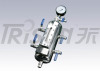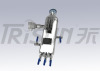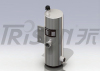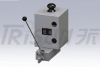
High-Precision Lapping Machine
A lapping machine is an essential precision tool used to achieve flat, smooth, and polished surfaces in manufacturing. Designed for industries that demand exact tolerances, our lapping syatem ensures consistent quality and reduces rework. Whether you are in automotive, aerospace, or toolmaking, this machine delivers unmatched accuracy and efficiency.
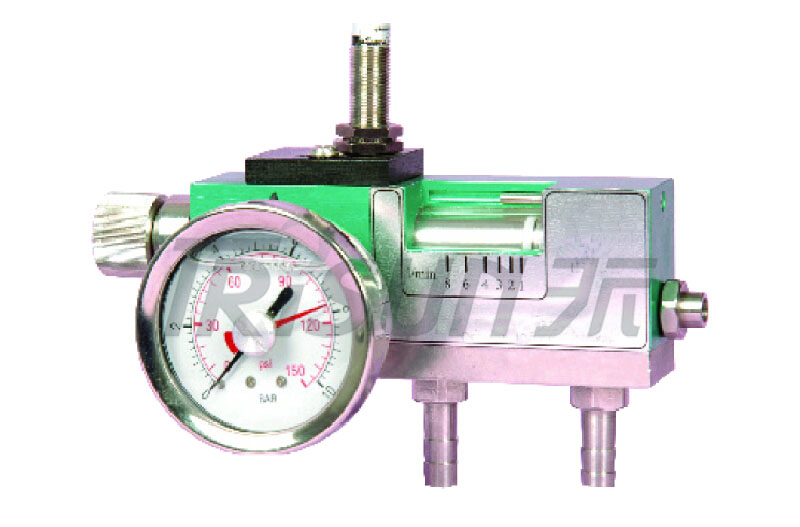
Lapping Machine : Technical specifications
The TRISUN lapping machine is a high-precision surface finishing system designed to produce ultra-flat, smooth, and polished surfaces on mechanical seal faces and other critical components. It is widely used in seal manufacturing and precision engineering industries where tight tolerances and superior surface finishes are essential.
| Specification | Details |
|---|---|
| Product Name | TRISUN Lapping Machine |
| Machine Type | Single-Side / Double-Side Lapping Machine |
| Application | Precision Surface Finishing |
| Surface Accuracy | Up to 0.0001 mm |
| Surface Roughness (Ra) | < 0.01 µm |
| Speed Control | Variable Speed |
| Pressure System | Adjustable Pressure |
| Slurry Feed System | Automatic / Manual |
| Processing Method | Abrasive Slurry Lapping |
| Construction | Heavy-Duty Industrial Design |
| Operating Interface | User-Friendly Controls |
| Power Supply | 220V / 380V / 415V (Customisable) |
| Automation Level | Semi-Automatic / Custom Configurations |
| Certifications | ISO-Compliant Manufacturing |
| Industries Served | Mechanical Seals, Automotive, Aerospace, Electronics, Medical Devices |
Compatible components and applications
Unlike mechanical seals, the lapping system is not designed for specific pump models. Instead, it is used to manufacture and refurbish precision components used across various industries.
Components compatible with the lapping system
| Component Type | Application |
|---|---|
| Mechanical Seal Faces | Seal manufacturing and refurbishment |
| Carbon Seal Rings | Surface finishing |
| Silicon Carbide Seal Rings | Precision lapping |
| Tungsten Carbide Seal Faces | Flatness correction |
| Ceramic Components | Fine finishing |
| Valve Plates | Surface preparation |
| Pump Wear Rings | Precision machining |
| Optical Components | Ultra-flat finishing |
| Semiconductor Parts | High-accuracy polishing |
| Medical Device Components | Surface finishing |
Industries served
- Mechanical seal manufacturing
- Pump component production
- Automotive manufacturing
- Aerospace engineering
- Electronics and semiconductor industries
- Medical device manufacturing
- Precision engineering workshops
- Tool and die manufacturing
Material compatibility
For a lapping system, traditional mechanical seal material combinations are not applicable. Instead, the machine processes a wide variety of materials used in seal manufacturing and precision engineering.
Materials that can be processed
| Material | Application | Benefits |
|---|---|---|
| Silicon Carbide (SiC) | Mechanical seal faces | Excellent hardness and wear resistance |
| Tungsten Carbide (TC) | Heavy-duty seal components | Superior toughness |
| Carbon Graphite | Mechanical seal rings | Fine surface finish |
| Stainless Steel | Precision components | Dimensional accuracy |
| Ceramics | Seal rings and industrial parts | High flatness capability |
| Glass | Optical applications | Mirror-like finishes |
| Silicon Wafers | Semiconductor industry | Uniform thickness |
| Composite Materials | Industrial components | Controlled material removal |
Abrasive slurry options
| Abrasive Type | Recommended Applications |
|---|---|
| Diamond Slurry | SiC, TC, ceramics |
| Silicon Carbide Slurry | Carbon and ceramic components |
| Aluminium Oxide Slurry | Stainless steel and softer materials |
| Colloidal Suspensions | Ultra-fine finishing applications |
Dimensions and machine configuration table
TRISUN offers customised machine sizes based on production requirements.
| Configuration | Plate Diameter | Typical Applications |
|---|---|---|
| Small Benchtop System | 300 mm | R&D and small-batch production |
| Medium Production System | 600 mm | Mechanical seal manufacturing |
| Large Industrial System | 900 mm | High-volume production |
| Custom Configuration | Available Upon Request | Special applications |
Process capability table
| Parameter | Performance |
|---|---|
| Flatness Accuracy | Up to 0.0001 mm |
| Surface Finish | Ra < 0.01 µm |
| Material Removal | Micron-Level Control |
| Repeatability | Excellent |
| Batch Processing | Supported |
| Double-Side Processing | Available |
| Custom Automation | Available |
Key features
Precision surface finishing for high-accuracy components
Delivers high flatness and ultra-smooth surface finishes for precision engineering, metal components, and industrial machining applications where tight tolerances are required.
Heavy-duty construction for industrial use
Built with robust industrial-grade materials, ensuring long-lasting performance and durability in demanding manufacturing and metalworking environments.
Variable speed control for multiple materials
Features adjustable speed settings to support lapping, polishing, and surface finishing of metals, ceramics, and composite materials.
User-friendly machine operation
Designed with intuitive controls and ergonomic operation, allowing operators to perform surface finishing processes efficiently.
Consistent surface finish quality
Ensures uniform surface finishing and controlled material removal, helping manufacturers maintain high-quality precision components while reducing waste.
Low maintenance for reduced downtime
Engineered with fewer wear-prone parts, minimizing maintenance requirements and production downtime.
Customizable sizes and specifications
Available in different machine sizes and configurations to suit various industrial surface finishing and precision manufacturing needs.
Key benefits
Higher accuracy and reduced part rejection in precision machining
This precision surface finishing machine improves dimensional accuracy, flatness, and surface finish quality, helping manufacturers reduce part rejection rates in precision machining and metal finishing processes.
Faster finishing cycles for improved manufacturing efficiency
Advanced lapping and polishing technology enables faster surface finishing cycles, increasing productivity in industrial manufacturing, precision engineering, and high-volume production environments.
Extended lifespan of critical machine components
By achieving smooth, uniform surface finishes, lapping systems help reduce friction, wear, and mechanical stress, extending the service life of precision components and machine parts.
Lower operational costs with reduced rework and material waste
High-precision finishing minimizes rework, scrap material, and quality defects, helping manufacturers lower operational costs and improve production efficiency.
Versatile applications across multiple industries and materials
Industrial lapping systems for metal, ceramic, and composite components are widely used in automotive, aerospace, electronics, semiconductor, and precision manufacturing industries.
Why choose Trisun lapping system
Choosing our lapping system means investing in quality, precision, and reliability. With proven engineering and international certifications, our machine is trusted by leading industries worldwide. Backed by expert technical support and service, it ensures long-term productivity.
- ISO-certified quality
- Proven industry applications
- Backed by expert support
How to use a lapping system for precision surface finishing and high-accuracy machining
Step 1: Machine setup and workpiece preparation
- Secure the workpiece on the lapping system table or fixture to prevent movement during the finishing process.
- Select the appropriate abrasive slurry or lapping compound based on the material type (metal, ceramic, glass, or semiconductor components).
- Ensure all machine safety guards, shields, and protective covers are properly installed before starting the operation.
Step 2: Adjust lapping system speed, pressure, and slurry flow
- Set the correct lapping plate speed, pressure settings, and process parameters according to the material hardness and required surface finish quality.
- Verify that the abrasive slurry is evenly distributed across the lapping plate to ensure uniform material removal and consistent surface finishing.
Step 3: Start the precision lapping process
- Power on the industrial surface finishing system and begin the precision surface finishing operation.
- Continuously monitor the contact between the workpiece and the lapping plate to maintain consistent pressure and uniform material removal.
- Adjust machine speed or applied pressure if needed to achieve the desired surface flatness, dimensional accuracy, and finish quality.
Step 4: Surface inspection and final finishing
- Measure the surface flatness, roughness, and dimensional accuracy using precision inspection tools such as surface gauges or measuring instruments.
- If the required surface finishing specifications are not achieved, repeat the lapping process with adjusted parameters.
- After completion, clean the workpiece and lapping system thoroughly to remove abrasive slurry residues and finishing compounds.
Comparison: TRISUN lapping machine vs conventional surface finishing solutions
For a detailed breakdown of performance standards and layout structural context, please see the reference document screencapture-trisunltd-shop-lapping-machine-2026-06-01-09_13_31.png.
| Feature | TRISUN Lapping Systems | Conventional Grinding / Polishing Systems | Why It Matters |
|---|---|---|---|
| Surface Accuracy & Flatness | Achieves ultra-flat surfaces with tolerances up to 0.0001 mm, ideal for mechanical seals, valve plates, and optical components. | Conventional polishing or grinding typically achieves 0.005–0.01 mm flatness and lacks precision consistency. | Higher flatness ensures tighter sealing, reduced leakage, and improved performance of precision parts. |
| Material Removal Control | Uses a low-pressure, controlled abrasive slurry to remove only microns of material per cycle, preventing deformation or heat damage. | Grinding applies higher pressure and temperature, which can cause warping or microcracks. | Controlled material removal enhances component durability and repeatability. |
| Surface Finish Quality | Delivers mirror-like finishes (Ra < 0.01 µm) suitable for high-end sealing and optical surfaces. | Conventional systems produce rougher finishes (Ra = 0.05–0.2 µm) and often need multiple reworks. | A finer finish reduces friction, improves sealing, and boosts component longevity. |
| Machine Configuration | Offers single-side and double-side lapping system options with variable speed, pressure, and slurry control. | Manual polishing tables and grinders have limited adjustment capabilities. | Provides process flexibility across materials and part geometries. |
| Automation & Ease of Use | Equipped with programmable timers, variable-speed drives, and user-friendly interfaces for consistent results. | Manual methods depend on operator skill and continuous supervision. | Automation ensures consistent quality and increases throughput. |
| Versatility & Material Compatibility | Efficiently processes ceramics, tungsten carbide, stainless steel, silicon, and carbon-based seal rings. | Traditional polishing methods often require separate setups or abrasives for each material. | Greater versatility saves time and simplifies production workflow. |
| Maintenance & Consumables | Features a durable design, easy cleaning system, and optimized slurry consumption to minimize operating costs. | Grinding systems consume more abrasives and wear plates faster. | Reduced maintenance means lower cost per part and longer machine life. |
How it works: The lapping process explained
The lapping process is a precision finishing operation designed to produce extremely flat and smooth surfaces by using an abrasive slurry between the workpiece and a rotating plate. TRISUN’s advanced lapping systems combine accuracy, control, and automation for consistent results across various materials.
1. Setup and preparation
The workpiece—such as a mechanical seal ring, metal plate, or ceramic component used in equipment like an ANSI pump—is securely positioned on the lapping plate or carrier ring. A measured amount of abrasive slurry (typically containing silicon carbide or diamond particles suspended in a fluid) is applied evenly over the plate. This slurry acts as a microscopic cutting agent, gradually removing high spots on the workpiece surface.
2. Pressure and speed adjustment
Once the workpiece is in place, the operator sets the desired lapping speed, pressure, and slurry flow rate through the control panel. These parameters depend on the material type and the required finish. Lower speeds are used for fine finishing, while higher speeds and pressure are applied for initial flatness correction.
3. Lapping operation
As the plate rotates, abrasive particles roll and slide between the lap plate and the workpiece surface. This micro-abrasive action gently removes material peaks, producing a perfectly level and uniform surface. In double-side machines, both sides of the workpiece are processed simultaneously—reducing cycle time and maintaining excellent parallelism.
4. Monitoring and control
Throughout the process, the machine ensures even pressure distribution and consistent slurry supply. Operators can adjust parameters in real-time to achieve target surface roughness or flatness. The precision design of TRISUN’s precision finishing system minimizes vibration and ensures repeatable outcomes across multiple batches.
5. Cleaning and inspection
After lapping, the workpiece and machine are cleaned to remove all slurry residues. Surface finish and flatness are verified using precision metrology instruments such as optical flats or surface testers. If needed, the process can be repeated to reach tighter tolerances.
6. Result: Perfect flatness and finish
The final output is a component with micron-level accuracy, uniform thickness, and superior surface smoothness. This process is essential in producing sealing surfaces, precision valves, optical lenses, and other parts where surface integrity and tight tolerance are critical.
Industry applications
- Automotive Industry – Engine components, fuel systems, and valve seats.
- Aerospace Industry – High-precision turbine blades and sealing surfaces.
- Tool & Die Making – Dies, molds, and cutting tools requiring exact tolerances.
- Electronics Manufacturing – Flat surfaces for semiconductors and micro-components.
- Medical Devices – Surgical instruments and precision implants.
- Energy Sector – Sealing components in turbines and pumps.
Maintenance guide
Routine maintenance
- Clean the lapping plate daily to remove abrasive slurry, metal particles, and residue.
- Inspect lapping plate flatness, surface wear, and glazing that can affect surface finish accuracy.
- Check slurry feed system flow rate and abrasive concentration for consistent material removal.
- Inspect work holders, carriers, and conditioning rings for uneven wear.
Preventive maintenance
- Perform regular lapping plate conditioning or resurfacing to maintain flatness tolerance.
- Inspect spindle bearings, drive motors, and rotating assemblies for vibration or noise.
- Lubricate moving parts according to manufacturer-recommended maintenance schedules.
- Check belts, couplings, and drive alignment to prevent surface defects.
Abrasive and slurry management
- Use correct abrasive type and grit size based on lapping material and finish requirements.
- Maintain proper slurry concentration to avoid scratching, glazing, or low removal rates.
- Prevent slurry contamination to ensure repeatable lapping results and dimensional accuracy.
Safety and system checks
- Verify emergency stop buttons, safety guards, and splash covers are functioning properly.
- Inspect electrical connections and control panels for loose wiring or wear.
- Check pneumatic or hydraulic lines for leaks or pressure loss.
Shutdown and best practices
- Clean the Precision Surface Finishing Systems thoroughly after production runs.
- Drain slurry and coolant systems during extended downtime.
- Protect exposed metal surfaces to prevent corrosion.
- Avoid overloading this machine beyond rated speed and pressure limits.
A modern lapping and polishing machine plays a critical role in achieving ultra-flat, high-precision surface finishes required for cast iron, mechanical seals, ceramic components, carbide parts, and other critical assemblies. With advancements in double-side lapping systems, automation, and precision-grade abrasive systems, manufacturers can now achieve tighter tolerances, superior uniformity, and longer component life.
Whether upgrading to an industrial lapping system, choosing an automated unit, or optimizing processes for machined seal finishing, companies benefit from improved efficiency, better repeatability, and reduced rework costs. Additional systems such as thermosiphon units and advanced sealing components integrate seamlessly with modern finishing workflows, helping maintain temperature control, cleanliness, and component reliability during the lapping process.
High-accuracy lapping also contributes to better performance in downstream systems connected to compressors, pumps, and rotating equipment. In many applications, precision lapping ensures the reliability of components used in compressor control valves, mechanical seal faces, and industrial air or fluid systems—resulting in longer operational life and improved system efficiency.
Overall, investing in the right lapping technology, understanding abrasive methods, and choosing the right supplier can significantly improve surface quality, product reliability, and production throughput.
Frequently asked questions (FAQs)
What Is a Lapping Machine Used for in Precision Manufacturing?
A lapping machine for precision surface finishing is used to produce ultra-flat, smooth, and polished surfaces on high-precision components. It improves dimensional accuracy and surface finish quality in parts such as industrial valves, turbine blades, sealing surfaces, molds, and dies used in precision engineering and manufacturing industries.
How Does a Lapping Polishing Machine Work in Surface Finishing Processes?
An industrial lapping and polishing machine works by applying an abrasive slurry or lapping compound between the workpiece and the rotating lapping plate. Controlled pressure, motion, and abrasive action gradually remove microscopic material layers, producing a uniform, high-precision flat surface with excellent surface finish and tight tolerances.
Which Industries Use Lapping Systems for Precision Components?
Precision lapping and polishing machines are widely used in automotive manufacturing, aerospace engineering, tool and die making, electronics, semiconductor production, and energy equipment manufacturing. They are also essential in medical device manufacturing and high-precision industrial component production.
What Materials Can Be Processed Using Lapping Systems?
These industrial surface finishing systems can process metal and ceramic finishing can process a variety of materials, including metals, ceramics, plastics, glass, and composite materials. Different abrasive compounds, lapping plates, and machine speeds are selected based on material hardness, surface finish requirements, and precision tolerances.
Are Lapping Systems Expensive to Maintain in Industrial Operations?
Most modern surface polishing machine machines for precision machining are designed with low-maintenance components and durable mechanical systems. Regular cleaning, lubrication, and periodic inspection help maintain optimal performance, while replaceable wear parts keep maintenance costs relatively low.
Can Lapping Systems Be Customized for Industry-Specific Applications?
Yes, industrial lapping and polishing machines are available in multiple sizes, configurations, and automation levels to meet different precision surface finishing requirements. Custom machines can be designed for automotive components, aerospace parts, semiconductor wafers, medical devices, and other specialized manufacturing applications.
Upgrade your finishing process with our precision lapping and polishing machine, engineered for superior surface accuracy and consistency. Ideal for advanced lapping and polishing applications, our solution helps reduce rework, improve surface quality, and enhance efficiency across industries using high-performance polishing machines. Contact Our Team for expert guidance.
Related Products