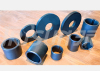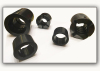
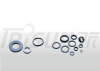
Silicon Carbide Tungsten Carbide
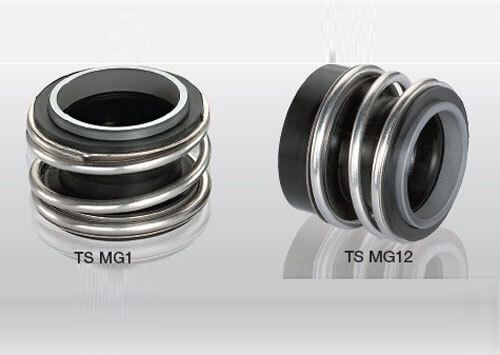
TRISUN's Silicon Carbide – Tungsten Carbide mechanical seal offers exceptional hardness, chemical resistance, and thermal stability—making it ideal for demanding industrial applications. Featuring a precision-engineered TC ring, manufactured from cemented carbide, this seal combination benefits from a high melting point and outstanding durability similar to materials used in carbide cutting tools.
Known for superior resistance to scratching and wear, this seal pairing performs reliably in abrasive and corrosive environments. Engineered for durability and performance, it is well-suited for high-speed rotation and high-temperature operations.
Commonly used in pumps, compressors, and mixers, it ensures reliable sealing under extreme conditions while minimizing maintenance and extending equipment life.

Tungsten carbide is one of the hardest and most durable materials used in mechanical seals, cutting tools, and industrial components. TRISUN offers high-quality TC seals combined with silicon carbide for superior performance in abrasive, corrosive, and high-temperature applications.
Key Features:
* High wear resistance and long service life
* Excellent thermal conductivity and chemical compatibility
* Ideal for abrasive or corrosive media
* Suitable for high-load, high-speed applications
Upgrade your sealing system with TRISUN's high-performance Silicon Carbide – Cemented Carbide seal for maximum efficiency and protection.
Why Choose TRISUN's Tungsten Carbide Mechanical Seals?
Cemented carbide is renowned for its outstanding hardness and resistance to wear, making it a preferred choice for mechanical seals in tough industrial environments. TRISUN's seals combine this exceptional material with silicon carbide to create a robust sealing solution capable of withstanding extreme pressure, temperature, and corrosive substances. This ensures a long operational life and minimal downtime, saving businesses both time and maintenance costs.
The use of carbide in our seals means superior durability even under abrasive conditions where other materials fail. This makes them particularly suitable for pumps and mixers handling slurry, chemicals, or other harsh fluids. These carbide's ability to maintain integrity in aggressive environments guarantees leak-free performance and enhanced safety for your operations.
Moreover, carbide material's excellent thermal conductivity allows the seal to dissipate heat efficiently, preventing damage from overheating during high-speed or high-load applications. Combined with silicon carbide's corrosion resistance, TRISUN's mechanical seals provide a perfect balance of toughness and chemical stability.
By choosing TRISUN's machined seals, you are investing in cutting-edge technology designed to optimize performance, increase reliability, and extend equipment life. Whether you are replacing worn seals or upgrading existing systems, our seals deliver superior performance that meets stringent industry standards.
Experience the difference that TRISUN's advanced seal solutions bring to your industrial applications—engineered for precision, durability, and peak performance.
| Specification | Details |
|---|---|
|
Material |
Tungsten Carbide Composite or Pure BC6/BC7 Grade |
|
Hardness |
Vickers Hardness > 1500 HV |
|
Wear Rating |
Excellent – suited for highly abrasive and erosive environments |
|
Temperature Limits |
Up to 300°C (572°F) depending on grade and seal pairing |
|
Pressure Limits |
Up to 200 bar (2900 psi), varies by application |
|
Compatible Fluid Types |
Abrasive slurries, corrosive chemicals, hydrocarbons, wastewater, seawater |
Tungsten Carbide Applications
Slurry & Mining Pumps
Excellent for handling abrasive slurries or fluids containing hard solids, ensuring longer seal life in mining and dredging operations.
Chemical Processing Pumps
Resists chemical corrosion in aggressive solvents, acids, and alkalis commonly used in ANSI pumps across chemical and petrochemical processing plants.
Pulp & Paper & Steel Mills
Withstands fibrous, particle-laden, or viscos fluids typical in pulp, paper, and steel applications, reducing maintenance downtime.
Cooling Water & Power Plants
Performs reliably in erosive high-flow and high-temperature cooling systems in power generation facilities.
Municipal & Wastewater Pumps
Provide superior wear resistance in pumps handling sludge, grit, and untreated wastewater, reducing seal replacement cycles.
Dry Gas Seal & Compressor Applications
Tungsten composite components are widely used in dry gas seals for centrifugal compressors, offering exceptional wear resistance, thermal stability, and long-term performance in high-speed, high-pressure gas environments.
How to Select the Right TC Seal
Choosing the right Cemented TC mechanical seal is critical to achieving long service life, reducing maintenance costs, and ensuring reliable performance in harsh environments. When evaluating seal options, consider the following factors:
Operating Environment
- For highly abrasive fluids (slurry, mining, dredging), this seal faces are preferred because of their superior wear resistance.
- In corrosive fluids (acids, alkalis, seawater), a combination of TC against silicon carbide or pure silicon carbide may perform better.
Temperature & Pressure Limits
- These seals handle up to 300°C (572°F) and high pressures up to 200 bar, making them ideal for pumps and compressors in heavy-duty industries.
- For extreme chemical or thermal environments, a SiC vs TC pairing helps balance corrosion and thermal stability.
Fluid Type
- Slurries & Particulate Fluids → Use these seals for excellent resistance to abrasive wear.
- Aggressive Chemicals → Use silicon carbide seals or TC paired with SiC for enhanced chemical resistance.
Equipment Speed & Load
- High-speed pumps and compressors generate heat. TC's thermal conductivity helps dissipate heat, preventing seal face damage.
Cost vs. Longevity
- Although these seals may have a higher initial cost, they typically deliver 3–5x longer service life compared to ceramic or carbon seals, making them cost-effective long term.
SiC vs TC: Comparison Table
When choosing between SiC and TC seals, it's important to understand their properties and best-fit applications:
| Property / Feature | Tungsten Carbide (TC) | Silicon Carbide (SiC) |
|---|---|---|
|
Hardness |
Very High (~1500 HV) |
Extremely High (~2500 HV) |
|
Wear Resistance |
Excellent – best for abrasive media (slurries, sand, grit) |
Good – less suited for abrasive, better for corrosion |
|
Thermal Conductivity |
High – dissipates heat effectively |
Moderate – retains more heat |
|
Corrosion Resistance |
Moderate (can corrode in some chemicals/seawater) |
Excellent – highly resistant to acids, alkalis, seawater |
|
Toughness |
High (resists fracture under heavy loads) |
Brittle compared to carbide |
|
Best Applications |
Mining, dredging, slurry pumps, steel industry, wastewater pumps |
Chemical processing, seawater pumps, pharmaceutical & food processing |
|
Seal Pairing |
Often paired with SiC for balanced performance |
Often paired with TC for durability & chemical resistance |
In summary:
- Choose Cemented carbide seals for abrasive, high-load, or high-pressure conditions.
- Choose silicon carbide seals for corrosive or chemically aggressive media.
- For the best of both worlds, use TC vs SiC pairing in critical applications.
Use Case Studies: Real-World Applications of TC Seals
Mining & Slurry Pumps
A large mining operation handling abrasive slurry with quartz particles experienced frequent seal failures with ceramic seals. After switching to TC seal rings, seal life improved by 300%, reducing pump downtime and cutting maintenance costs by 40%.
Chemical Processing Plant
In an aggressive acidic solvent environment, pure carbide seals showed signs of corrosion after long exposure. Engineers switched to a TC vs silicon carbide face pairing, achieving superior corrosion resistance while maintaining wear strength. This change doubled the operational lifespan of the seals.
Municipal Wastewater Treatment
A wastewater facility dealing with sludge and grit-laden fluids adopted TC mechanical seals in centrifugal pumps. Compared to carbon-graphite seals, carbide provided 4x longer service life, reducing unplanned outages and improving plant efficiency.
Power Plant Cooling Systems
A thermal power station's cooling water pumps required seals that could withstand high flow velocity and elevated temperature. Tungsten carbide rings were incorporated into the cemented carbide seals for their thermal conductivity and toughness, ensuring leak-free performance during peak operations.
FAQs
1. What are Silicon Carbide (SiC) and Tungsten Carbide (TC) sealing materials used for?
SiC and TC are used as high-performance sealing materials in mechanical seals, pumps, valves, and industrial equipment requiring wear resistance, corrosion resistance, and high-temperature durability.
2. What are the main differences between SiC and TC sealing materials?
Silicon Carbide is extremely hard, corrosion-resistant, and suitable for aggressive chemicals, while TC offers excellent wear resistance, toughness, and is ideal for abrasive or high-pressure applications.
3. What industries commonly use SiC and TC sealing materials?
These materials are widely used in chemical processing, water and wastewater treatment, pulp and paper, oil and gas, and power generation industries.
4. What are the temperature and pressure limits of SiC and TC seals?
SiC and TC can typically handle temperatures up to 1000°C (depending on design) and high pressures in mechanical seal applications, making them suitable for extreme operating conditions.
5. How do I choose between SiC and TC sealing materials for my application?
Choose SiC for chemical resistance and high hardness applications, and TC when superior wear resistance and toughness are required. Material selection depends on fluid type, temperature, pressure, and abrasive conditions.