Products

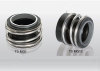
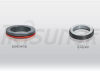

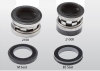
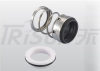
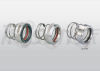
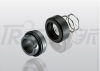
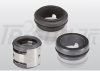


How to Select the Right Metal Bellows Seal
- Determine the required operating temperature and pressure.
- Identify the process fluid and chemical environment.
- Select an appropriate bellows material.
- Confirm shaft size and seal dimensions.
- Check the equipment's rotational speed.
- Consider corrosion, thermal cycling, and other application-specific conditions.
Frequently Asked Questions
What is a metal bellows mechanical seal, and how does it work?
A metal bellows mechanical seal is a shaft-sealing component that uses a flexible metallic bellows to maintain contact between the rotating and stationary seal faces. It helps prevent fluid leakage in pumps and other rotating equipment. Depending on its design and materials, a metal bellows seal can be suitable for high-temperature applications and demanding industrial operating conditions.
What are the advantages of using a metal bellows seal over an elastomer bellows seal?
Metal bellows seals can offer advantages in applications involving elevated temperatures, certain aggressive fluids, or conditions where elastomer compatibility is a concern. Unlike elastomer bellows designs, they use a metallic bellows as the flexible sealing element. The right choice depends on operating temperature, pressure, fluid properties, material compatibility, and equipment requirements.
What temperature and pressure can a metal bellows mechanical seal withstand?
The allowable temperature and pressure of a metal bellows mechanical seal depend on its model, bellows construction, materials, and operating conditions. For example, the TRISUN TSMB-J04 seal lists a temperature range of -75°C to +425°C, with pressure limits of up to 2 MPa for a single-ply bellows and 6.9 MPa for a double-ply bellows. Always verify the exact model specifications before selecting a seal.
How do I choose the right metal bellows mechanical seal for my pump?
To select the right metal bellows mechanical seal, identify the pump model, shaft diameter, existing seal reference, operating pressure, temperature, rotational speed, and pumped fluid. Also verify the required seal-face materials, secondary sealing materials, and metallic bellows alloy. Matching these specifications to the pump's operating conditions helps ensure proper fit, material compatibility, and reliable sealing performance.
Need a Metal Bellows Seal?
Provide your equipment model, shaft dimensions, process fluid, pressure, temperature, and operating speed to Trisun for help selecting a suitable metal bellows seal.
Get a Metal Bellows Seal Quote
Contact US
Product Information
Quantity
Unit
Piece
Support order samples, customization, wholesale direct, and complete payment. If the product you look for does not have corresponding customized content, pls fill out the form below to contact us, and we will reply ASAP.